Contamination Control and Particle Analysis
In hydraulic and lubrication systems, the use of clean and particle-free fluid is a critical factor for ensuring long-life, efficient, and safe operation of the system. Contaminants, metal particles, oil residues, and foreign substances within the system can cause wear on hydraulic components, blockages in valves and pumps, pressure losses, and system failures.
As TMS, we offer advanced contamination control and particle analysis services to ensure the healthy operation of hydraulic systems. By conducting tests and analyses in accordance with ISO and NAS standards, we measure the cleanliness of hydraulic fluid and ensure the system operates with optimum efficiency.
What is Contamination Control?
Contamination control in hydraulic systems is a process involving the determination, cleaning, and maintenance of determined cleaning levels of particles within hydraulic and lubrication oils. These analyses minimize failure risks by detecting whether there are undesired particles in the system.
Failure to regularly control contamination level leads to wear and malfunction of pumps, valves, filters, and hydraulic components over time, and loss of system efficiency.
Through contamination control:
- Efficient and long-life operation of the system is ensured.
- Unexpected failures and downtimes are prevented.
- Wear on hydraulic components is minimized.
- Energy losses and pressure drops are reduced.
- Operational efficiency is increased by lowering maintenance costs.
Particle Analysis and Testing Processes
Particle analysis is performed to evaluate the cleanliness of the oil in hydraulic systems. In these analyses, the amount of particles at determined micron levels is measured, detecting how clean the system is.
Particle Measurement Methods
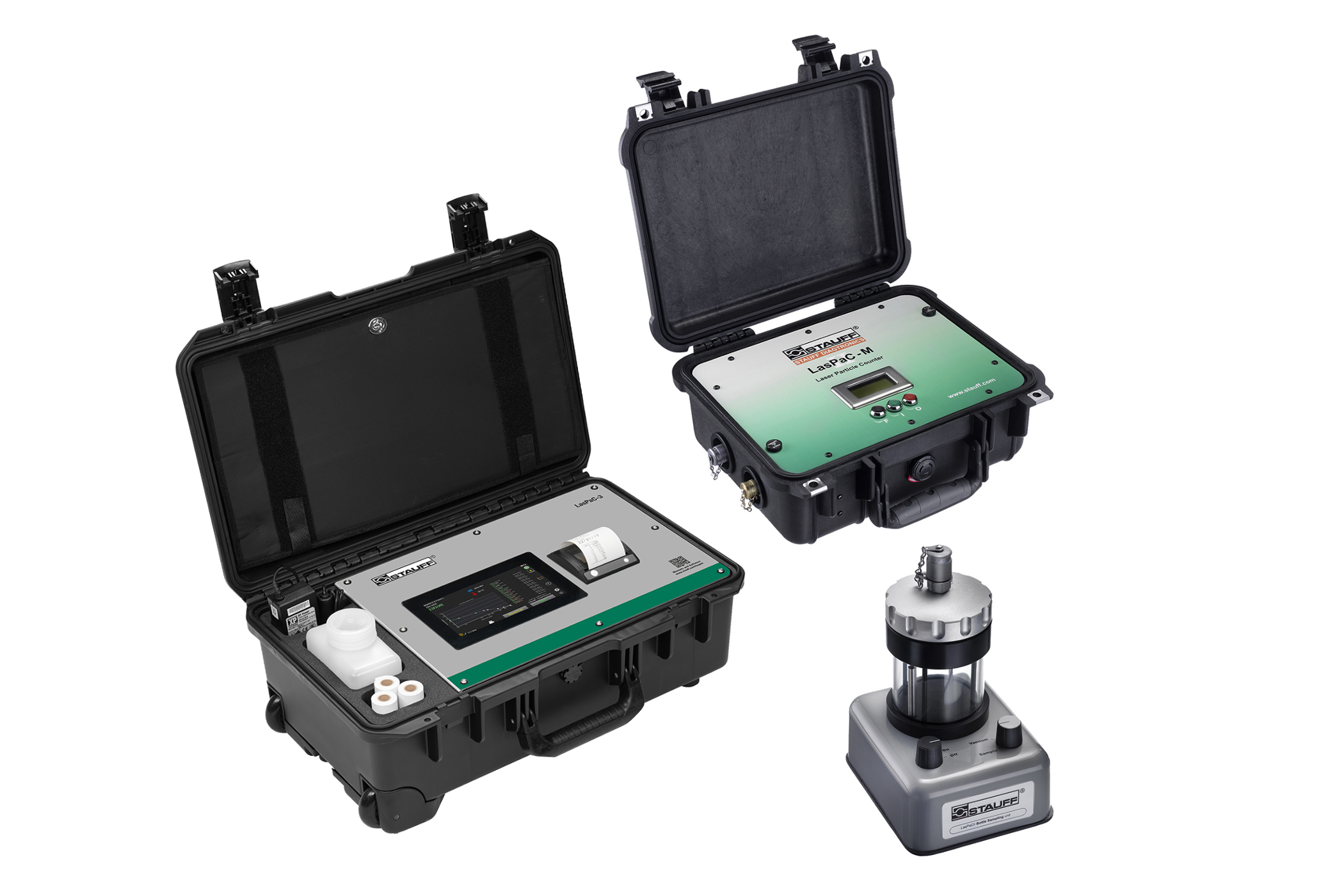
1. Electronic Contamination Measurement Devices
- Accurate electronic analysis devices are used to measure particles within hydraulic oil.
- Particle sizes are determined with special sensors by taking oil samples.
- Resulting data are evaluated according to international standards such as ISO 4406 and NAS 1638.
2. Laboratory Analyses
- Oil samples are examined under a microscope in laboratory to determine the type and source of particles.
- It is detected whether contaminants in the system are metal, plastic, rubber, or organic matter.
3. Post-Filtration Tests
- After the filtration process is completed, it is tested whether the system has reached the determined cleaning level.
- Contamination level is measured according to 3-micron, 5-micron, 10-micron, and 20-micron filtration stages in hydraulic circuits.
Particle Analysis According to ISO and NAS Standards
Contamination control and particle analysis are performed in accordance with ISO 4406 and NAS 1638 standards.
ISO 4406 Standard
- Determines the number of particles in >4 μm, >6 μm, and >14 μm sizes within hydraulic oil.
- How clean the oil is, is classified according to particle density.
NAS 1638 Standard
- Analyzes particles between 5 μm and 100 μm within hydraulic oil, determining system cleanliness.
- Specially used in aviation, defense industry, and industries requiring high precision.
Through these standards, the cleanliness of hydraulic oil is measured according to a certain reference level, determining clearly whether it is suitable.
Contamination Sources in Hydraulic Systems
There can be many different sources of contamination in hydraulic systems. Determination of these particles is important for ensuring long-life operation of the system.
- Burrs and metal particles remaining from the assembly and production process
- Rust and oxide layers in welding and pipelines
- Sludge formed by aging of hydraulic fluid
- Rubber and plastic particles coming from sealing elements
- Dust and dirt entering the system due to insufficient filtration
These particles can cause wear on pumps and valves, pressure drops, sealing problems, and degradation of hydraulic oil by moving within the system.
Benefits of Contamination Control
- Reduces maintenance costs by extending the life of system components.
- Supports equipment to operate more efficiently by keeping hydraulic fluid clean.
- Prevents damage to critical components such as valves, pumps, and cylinders.
- Increases efficiency by minimizing business downtimes.
- Optimizes energy consumption, ensuring the system does more work with less energy.
Contamination Control and Particle Analysis Services with TMS
As TMS, we offer comprehensive contamination control and particle analysis services to ensure the cleanliness and safety of hydraulic and lubrication systems. We use special test devices and analysis methods to ensure systems operate healthily.
Our services include:
- Contamination level detection with electronic particle measurement devices
- Analyses in accordance with ISO 4406 and NAS 1638 standards
- Detailed tests in laboratory environment by taking hydraulic oil samples
- Determination of the source of particles in the system
- Special filtration solutions for cleaning oil and hydraulic circuits
You can benefit from our contamination control and particle analysis services to ensure efficient and safe operation of your hydraulic systems.