
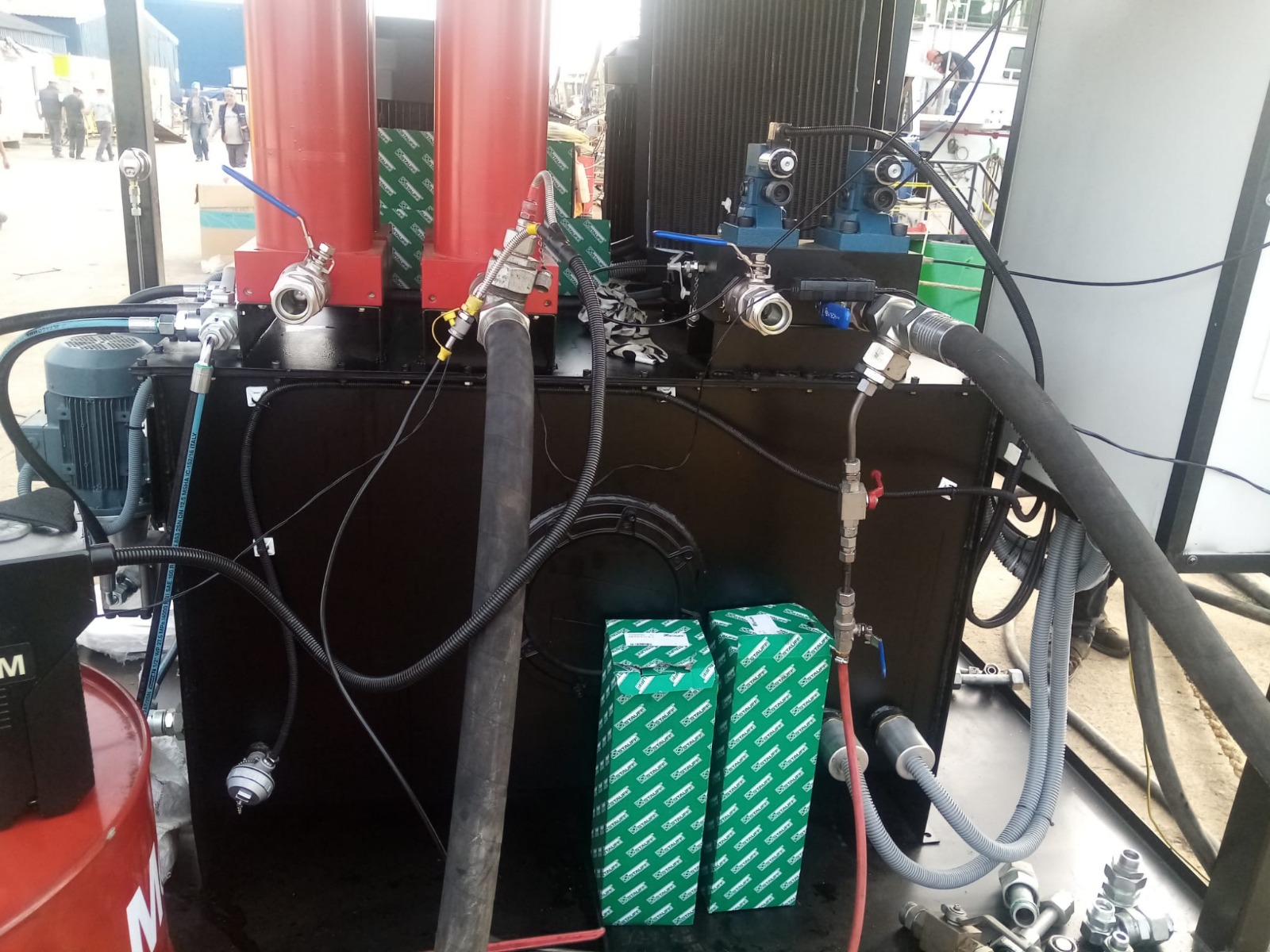
Flushing (Hydraulic Oil Cleaning) Applications
In hydraulic and lubrication systems, the use of clean and particle-free fluid is of great importance for long-life and efficient operation. Welding burrs, metal particles, dirt, oil residues, and foreign substances remaining from production and installation processes in pipelines can negatively affect the system performance and lead to serious failures. Flushing (washing with hydraulic oil) process ensures smooth and efficient operation of hydraulic systems by eliminating such pollutions.
As TMS, we offer professional flushing services to make the hydraulic circuits, pipelines, and lubrication systems of industrial plants suitable for the highest hygiene standards.
What is Flushing (Washing with Hydraulic Oil)?
Flushing is the process of removing foreign particles remaining in the system by passing the oil circulating in hydraulic systems through pipelines at high speed and with a turbulent flow. This ensures pure, clean, and particle-free circulation of the pressurized oil in the system.
Flushing is generally applied before commissioning newly established hydraulic systems or for cleaning systems that have been in use for a long time. This process guarantees efficient and safe operation of the system.
Advantages of flushing include protection of hydraulic components, prevention of pressure losses in the system, keeping hydraulic oil clean, increasing energy efficiency, and reducing maintenance costs.
Methods Used in Flushing Process
Flushing can be applied with different methods according to the characteristics of hydraulic circuits and pipelines.
Flushing with Turbulent Flow
This method ensures cleaning of metal particles, oil residues, and foreign substances remaining in the system by passing hydraulic oil through pipelines at high speed.
- It removes dirt and burrs from the system with high-speed flow.
- It provides more deep cleaning by increasing the friction effect of hydraulic oil.
- It helps clean production and installation residues remaining on inner surfaces of pipes.
Continuous Flushing at Low Pressure
In this method, hydraulic oil is circulated inside the system at a certain pressure for a long time to ensure gradual cleaning.
- It is used in systems that requiring delicate and long-term cleaning.
- Cleaning is provided without the system experiencing pressure loss.
- Gradual cleaning is applied in accordance with filtration stages.
Filtration Stages in Flushing Process
During the flushing process in hydraulic systems, all contaminants in the pipeline are cleaned by applying gradual filtration techniques.
- In the first stage, a 20-micron filter is used to capture large particles.
- Then, smaller contaminants are cleaned with 10-micron and 5-micron filters.
- In the final stage, the system is completely cleaned using a 3-micron filter.
Through this process, all particles in the system are reduced to levels in accordance with ISO and NAS standards, ensuring healthy operation of the system.
Advantages of Flushing Process
- Cleans burrs, rust, and metal particles remaining in the system.
- Ensures hydraulic fluid remains clean, extending the life of pumps and valves.
- Minimizes pressure loss in hydraulic system, increases efficiency.
- Reduces operation costs by lowering maintenance and repair costs.
- Increases safety by ensuring the system works as it did on the first day.
- Prevents sudden failure risks in hydraulic and lubrication systems.
Contamination Control and Particle Analysis
As TMS, we conduct contamination control and particle analysis to ensure the system is completely clean after the flushing process is completed.
- Particles in the system are analyzed using electronic contamination measurement devices.
- Quantities of pieces of different diameters from 2 microns to 100 microns are determined.
- These measurements are reported in accordance with NAS (National Aerospace Standard) and ISO 4406 standards.
Through these tests, the cleanliness of the oil in the system is verified, ensuring long-life and faultless operation of hydraulic circuits.
Quality Control Processes After Flushing
After the flushing process is completed, to ensure the system is completely clean and ready for operation, various tests are applied.
- Sealing Tests: We check if there are leaks in the system.
- Hydrostatic Pressure Tests: We verify the pressure resistance of pipelines.
- Filtration and Particle Measurement: We determine the amount of dirt in the system.
- Commissioning and Safety Controls: We test that all system components work correctly.
Flushing Services with TMS
As TMS, we offer professional flushing services to ensure hydraulic and lubrication systems operate with peak performance. By eliminating all contaminants inside the pipelines, we provide a long-life and efficient system.
Our services include:
- Flushing applications for industrial hydraulic systems
- Pre-commissioning cleaning processes in newly installed hydraulic circuits
- Contamination control and flushing for maintenance in existing hydraulic systems
- Particle analysis and reporting in accordance with ISO and NAS standards
- Cleaning and protection of oil with hydraulic oil filtration systems
Contact us to operate your hydraulic systems with the best performance and ensure long-life use.